Work scattered everywhere
Plans, task lists, updates, and documents can end up across spreadsheets, shared drives, local files, email, and separate tools — with no dependable source of truth.
 ES
ES
AIS Project Commander™
The operating challenge
Plans, task lists, updates, and documents can end up across spreadsheets, shared drives, local files, email, and separate tools — with no dependable source of truth.
Small projects, long programs, and work across departments, companies, locations, and time zones need a common view of scope, ownership, dependencies, and progress.
Stakeholders need an immediate way to understand status, tasks, milestones, risks, and decisions — not a manual report after the issue has already grown.
A clearer path
Bring initiatives, projects, and their intended outcomes into one connected leadership view.
Clarify responsibilities, milestones, and the decisions required to keep work moving.
Use a clearer view of risk, progress, and agreed indicators to guide execution.
A closer look
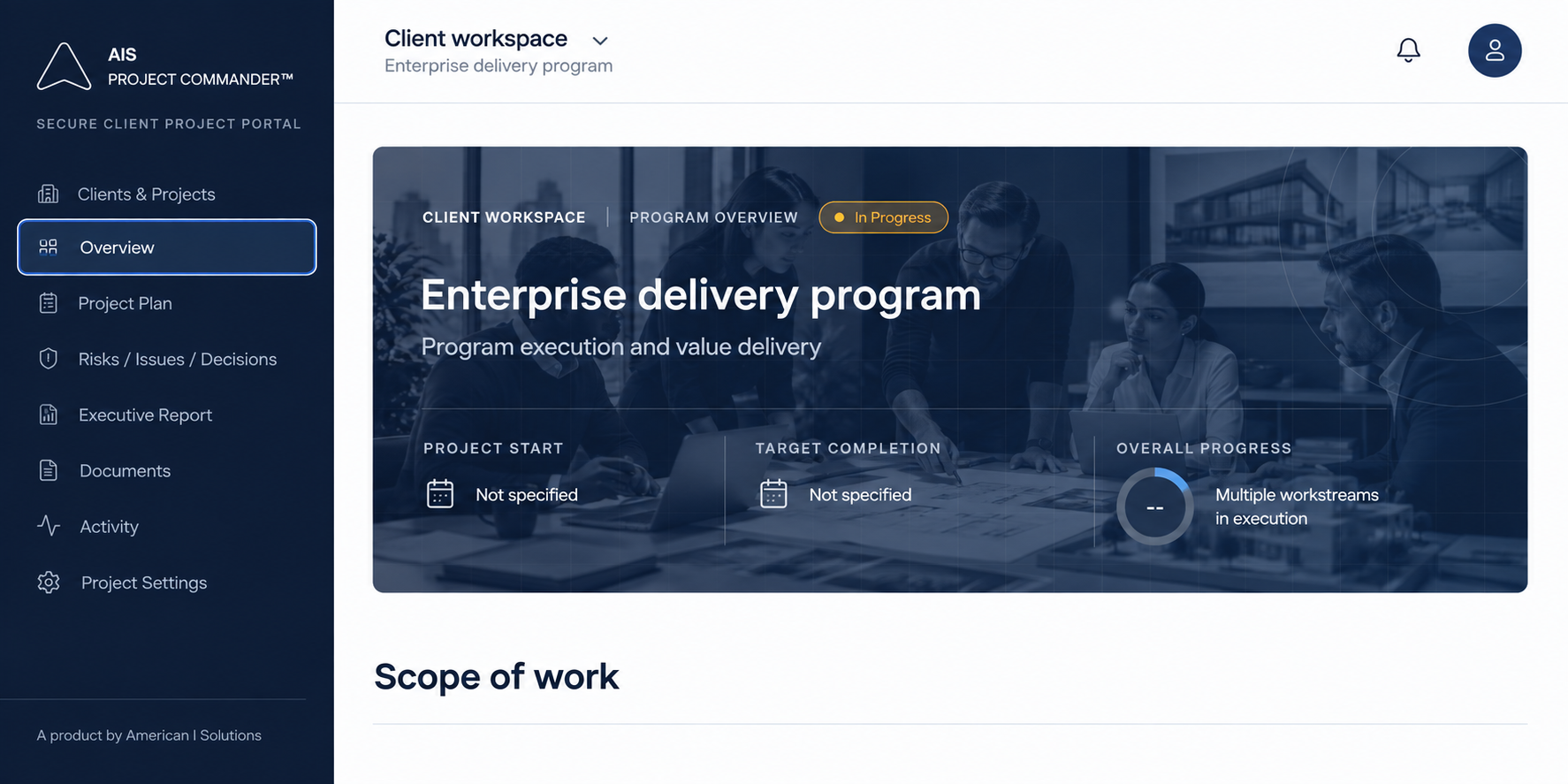
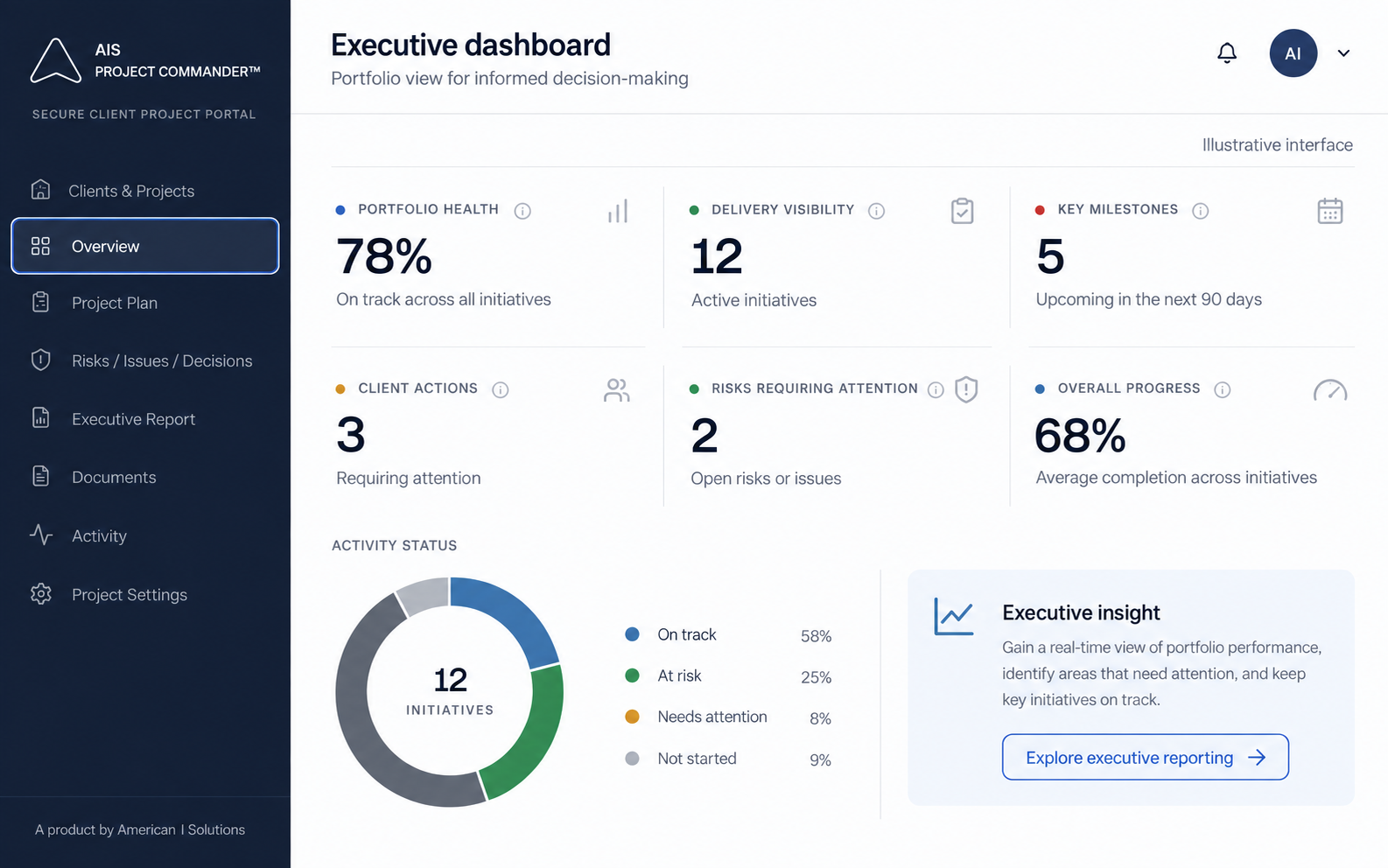
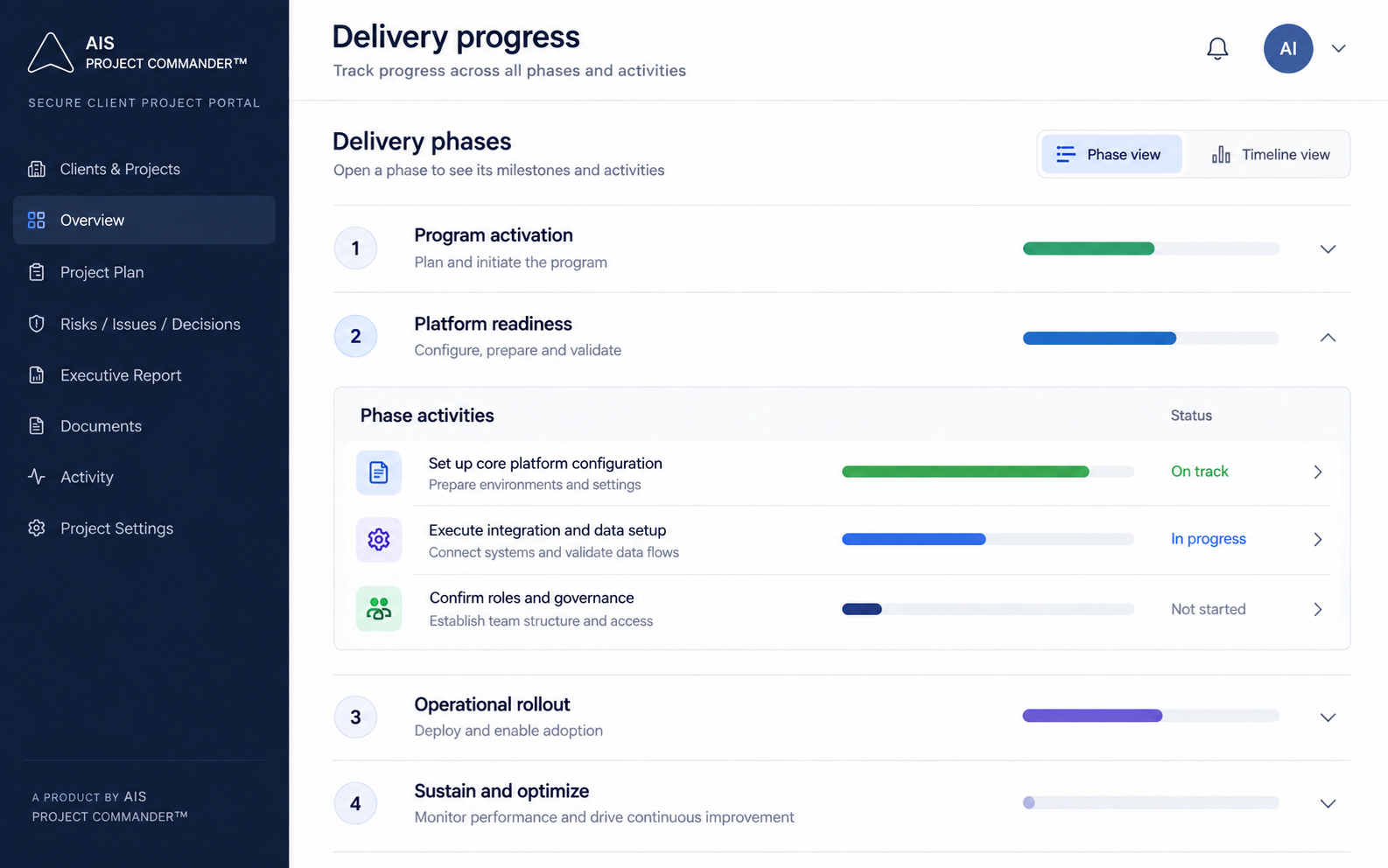
Anonymized product interface preview. Values and labels are illustrative; each AIS environment is configured around the client’s operating model, roles, and delivery needs.
What it supports

Bring agreed project scope, dates, plans, documents, activity, and shared context into a controlled workspace instead of scattered files and disconnected updates.
Connect Project Managers, Task Owners, and Stakeholders / FYI roles to the work they need to coordinate, complete, or monitor across each client and project.
Give leaders and project teams a faster view of project status, plans, risks, activity, documents, and reported progress so action can happen earlier.
Business value
Common questions
It is designed for leaders, project managers, delivery teams, task owners, and stakeholders who need one dependable picture of work in motion. It is especially useful when multiple initiatives, teams, locations, clients, or dependencies must be coordinated without losing accountability or context.
No. It reinforces project management discipline by giving the agreed delivery model a clear operational home. Teams can make scope, ownership, milestones, risks, decisions, and next actions visible in the same place—so governance is easier to apply consistently, not dependent on scattered status updates.
AIS begins with the operating need: how work enters, who owns each decision, what leaders need to see, and where delivery currently loses momentum. From there, AIS supports configuration, implementation, transition, and adoption around the agreed delivery model, rather than forcing a generic workflow onto the team.
Yes. AIS Project Commander™ is designed to create a clearer operating view for small projects, medium-sized initiatives, and complex programs. The level of planning detail, reporting cadence, risk management, and stakeholder visibility can be configured around the scale and governance needs of each delivery model.
It can centralize the agreed project record: scope, objectives, owners, tasks, milestones, dependencies, progress, risks, decisions, documents, activity, and reporting. That gives the team one controlled workspace instead of asking people to reconstruct the project story from spreadsheets, folders, email threads, and disconnected tools.
Visibility is designed around roles and the agreed governance model. Project teams can work from the detailed record they need, while leadership and stakeholders receive an appropriate view of health, progress, risks, decisions, and next actions—without creating unnecessary noise or exposing information outside the intended audience.
The workspace makes delivery signals visible alongside the work itself: unresolved dependencies, milestone movement, risk items, decisions awaiting an owner, and reported progress. This gives project managers and leaders a clearer basis for escalation and intervention before a status issue becomes a larger delivery problem.
Yes. The starting point is the client’s operating model and approved tool landscape. AIS can configure the workspace, information structure, and reporting views around the processes teams already rely on, while reducing duplicate status chasing and improving the consistency of the shared project record.
A project management system for small, medium, and large initiatives—centralizing plans, ownership, milestones, risks, and live delivery visibility in one operating environment.